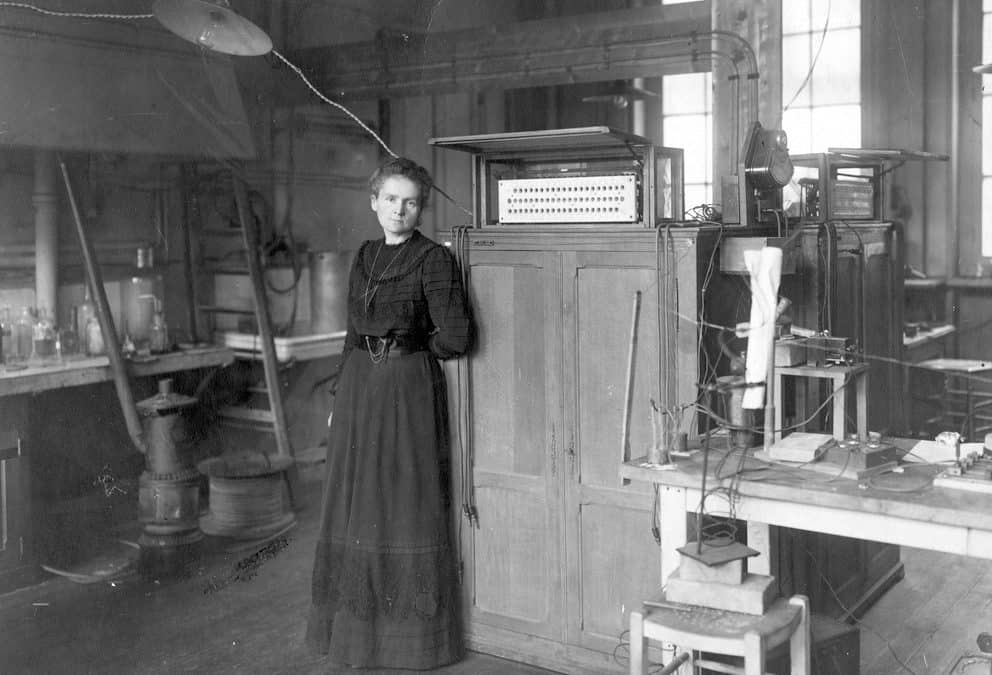
Marie Curie was born on November 7, 1857, in Warsaw, Poland. Curie was a very dedicated physicist and chemist. She was highly esteemed and became the first woman to win a Nobel Prize, and also the first to win it twice in two different categories.
She created advancements in the field of radioactivity. She investigated radiation in uranium rays, creating the term “radioactivity.” She also determined that this was an atomic property rather than a chemical property. She won the 1911 Nobel Prize in Chemistry for the discovery of the elements polonium and radium.
She also had many medical and academic achievements. During World War I, she developed mobile radiography units in order to provide X-ray services to field hospitals. This technology assisted battlefield surgeons in identifying shrapnel in wounded soldiers, which ended up helping over a million people. She founded the Radium Institute, which is now called the Curie Institute in Paris, and became a premier center for nuclear physics and cancer research. She became the first woman to lecture at the University of Paris and the first woman in Europe to receive a doctorate in science.
Curie was a major inspiration to women in this era. She was dedicated to science and driven by curiosity. She was a reflection of the relentless pursuit of knowledge. Curie died in 1934, aged 66, her cause of death was suspected to be due to exposure to radiation in the course of her scientific research.
“Nothing in life is to be feared, it is only to be understood.” ~ Marie Curie