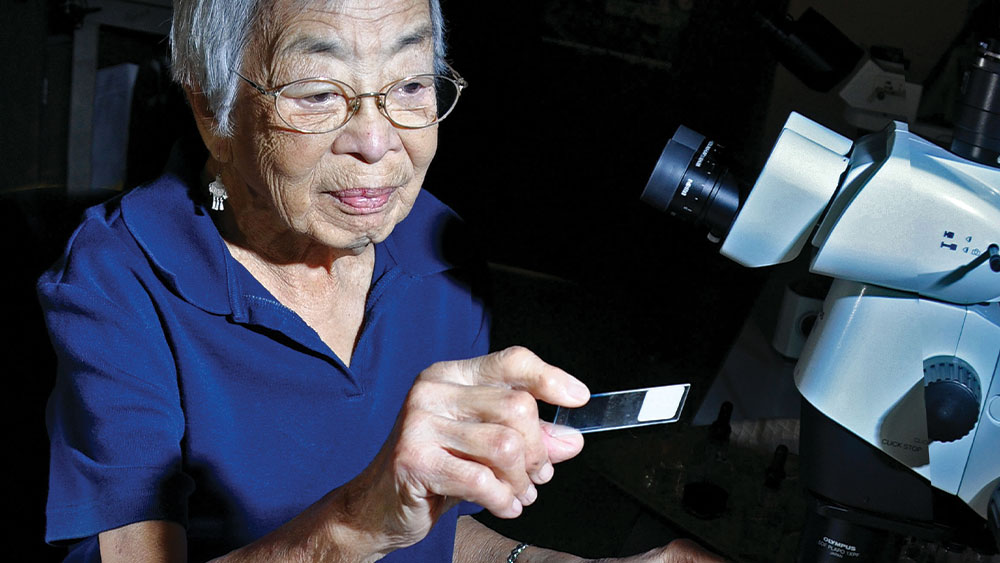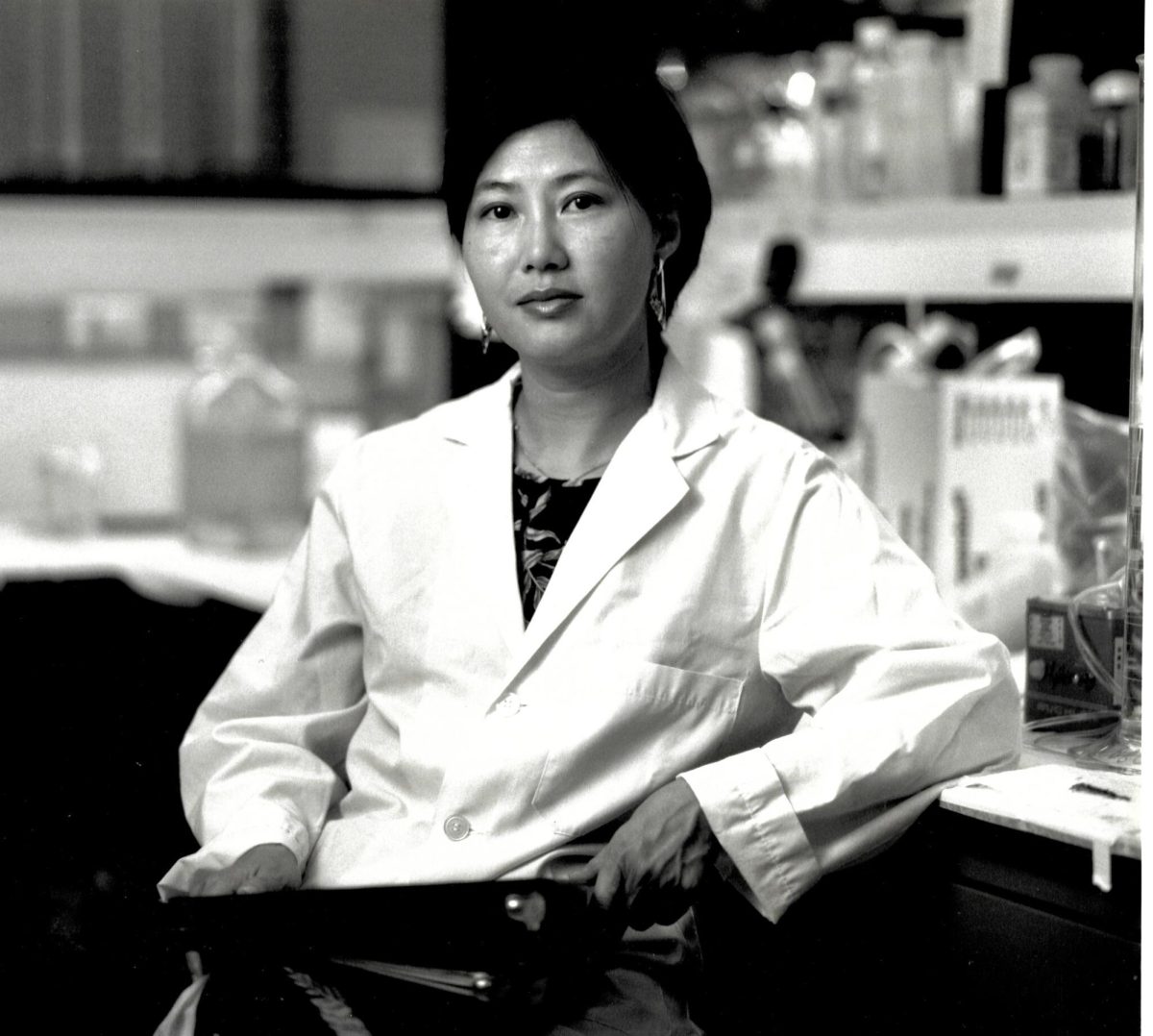
Dr. Flossie Wong-Staal stands as an unsung hero whose work saved millions of lives. Born Yee Ching Wong in Guangzhou, China in 1947, she immigrated to Hong Kong with her family after the Communist Revolution. She moved to the U.S. for college, earning her PhD in molecular biology from UCLA in 1972. Adopting the name “Flossie” from a childhood nickname, she entered a field where few women, and even fewer Asian women, were leading research labs.
Dr. Wong-Staal joined the National Cancer Institute in 1973 and became a pioneer in retrovirology. In 1985, she led the team that became the first to clone HIV and completely map its genes. This was the breakthrough that made HIV blood tests possible. Before her work, there was no reliable way to screen blood donations, and transfusions that were spreading the virus. Her genetic map of HIV also proved that the virus was the cause of AIDS, ending years of scientific debate and giving researchers a target for treatment.
Her contributions didn’t stop in the lab. Dr. Wong-Staal recognized that discoveries only matter if they reach patients. In 1990, she left the NCI to help lead biotech research at UC San Diego, focusing on gene therapy for HIV. She later co-founded Immusol, a company dedicated to turning AIDS research into real drugs and vaccines. Over her career she published over 400 scientific papers and was ranked as the top woman scientist of the 1980s by the Institute for Scientific Information.
Though she passed away in 2020, Dr. Wong-Staal’s impact is everywhere. Every HIV test, every antiretroviral drug, and every step toward a cure builds on her work. While other scientists became public faces of the AIDS crisis, Dr. Wong-Staal stayed in the lab, driven by data instead of recognition. Her legacy is proof that quiet, relentless science can change the world. As a Chinese American immigrant who broke barriers in both gender and race, she showed that innovation has no single face and that the people doing the most important work are often the ones you’ve never heard of.